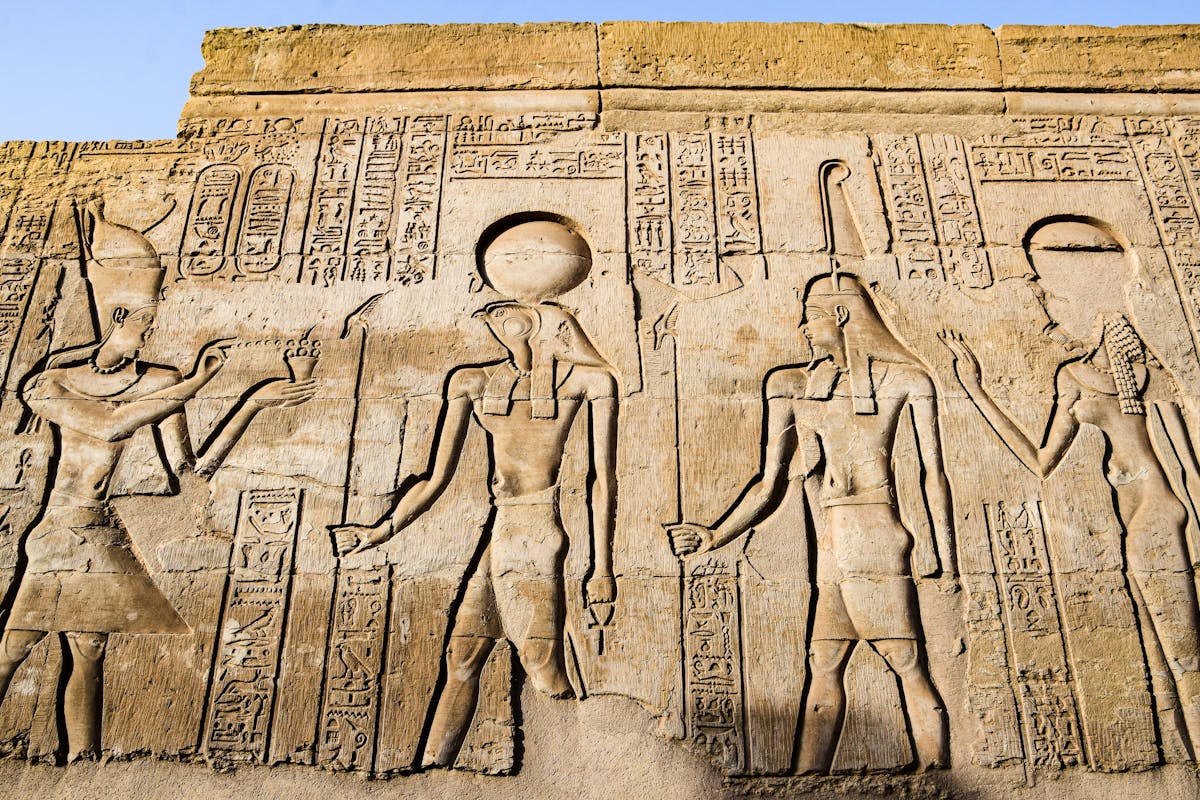
How Evidence of Ancient Lost Civilizations Continues to Challenge Modern Historical Timelines
Quick Answer: Ancient civilizations are increasingly challenging modern historical timelines as new evidence comes to light. Submerged coastal sites, megalithic precision, astronomically aligned structures, and cross-cultural origin stories all suggest that complex societies may have existed far earlier than mainstream history accepts. Tools like LiDAR, satellite imaging, and underwater archaeology continue to surface findings that do not fit established narratives. Together, this growing body of evidence is reshaping how researchers, historians, and stewards understand the development, decline, and inheritance of human knowledge.
The idea of advanced ancient civilizations has long captured the imagination of historians, researchers, and curious minds alike. For decades, mainstream historical timelines have suggested that complex societies began to develop only in the last several thousand years. Discoveries and reinterpretations of existing evidence are now challenging that narrative.
Ancient civilizations are no longer viewed solely as a backdrop for myth or legend. They are becoming a serious topic of cross-disciplinary investigation. From submerged cities to unexplained architectural precision, the growing body of evidence suggests that sophisticated societies may have existed far earlier than previously believed. This shift in understanding is forcing experts to reconsider how human history is defined and documented. To fund the discovery of these forgotten chapters is to participate directly in expanding that record.
Archaeological Discoveries That Raise New Questions
Recent archaeological findings have added significant weight to the discussion surrounding ancient civilizations. Sites once dismissed as anomalies are now being reexamined using modern technology. These investigations are revealing levels of sophistication that do not always align with established timelines.
Certain megalithic structures display precision that would be difficult to replicate even with current tools. The alignment of these structures with astronomical events further suggests a deep understanding of science and engineering held by their builders.
These characteristics are often associated with advanced ancient civilizations, yet many such sites predate what historians have traditionally considered the rise of complex societies. The growing list of these discoveries continues to challenge the assumption that early humans could not build, organize, and transmit knowledge at such a high level.
The Mystery of Advanced Knowledge in Early Societies
One of the most compelling aspects of ancient civilizations is the presence of advanced knowledge in early human history. Ancient texts, artifacts, and architectural designs often reveal an understanding of mathematics, astronomy, and engineering that seems far ahead of its accepted period.
This raises an important question. How did these early societies acquire such knowledge? Some researchers suggest the information may have been inherited from even earlier cultures that have since been lost to time. Others believe these achievements reflect human ingenuity developing faster than previously assumed.
Regardless of the explanation, the presence of advanced knowledge in ancient civilizations continues to challenge conventional historical timelines. It suggests that the development of civilization may not have been as linear or as recent as once believed.
Submerged Cities and the Possibility of Forgotten Worlds
Another fascinating area of research into ancient civilizations involves submerged structures found beneath oceans, seas, and lakes. These underwater sites often show signs of human construction, including walls, roads, and geometric patterns.
The existence of such structures raises questions about past environmental changes. Rising sea levels at the end of the last Ice Age could have submerged entire coastal cultures, effectively erasing them from the historical record. If that is the case, then many ancient civilizations may still be hidden beneath the water, waiting to be located and studied.
For more on how environmental upheaval and missing chapters fit together, see our deeper look at the hidden history of Earth. These findings suggest that our current understanding of history may be more incomplete than most curricula admit.
Oral Traditions and Cultural Memory
In addition to physical evidence, many cultures around the world have preserved stories that point back to early ancient civilizations. These oral traditions often describe advanced societies that existed long before recorded history.
While such accounts are sometimes dismissed as mythology, they may contain real elements of truth. Cultural memory can preserve information across generations, even if details become altered over time. When these stories are compared with archaeological findings, meaningful connections begin to emerge.
The consistency of certain themes across distant cultures, including flood narratives, sky-being origin stories, and accounts of vanished homelands, suggests there may be a shared memory of ancient civilizations whose direct records did not survive.
The Limits of Traditional Historical Timelines
Modern historical timelines are built on the best available evidence, but they are not immune to revision. As discoveries accumulate, previously accepted ideas must be reevaluated. This is especially true in the study of ancient civilizations, where new findings often contradict established theories.
One of the main challenges is the fragmentary nature of the evidence. Over thousands of years, structures erode, artifacts scatter, and records disappear. This makes forming a complete picture of early human history nearly impossible without ongoing fieldwork.
That limitation, however, also means there is still much to learn. The gaps in our knowledge leave real room for the possibility that ancient civilizations played a larger role in human development than currently recognized.
Technological Advances and New Insights
Advances in technology are playing a crucial role in uncovering evidence of ancient civilizations. Tools such as ground-penetrating radar, LiDAR, satellite imaging, and underwater exploration equipment are allowing researchers to investigate areas that were previously inaccessible.
These technologies are revealing hidden structures and patterns that were not visible before. As a result, sites once considered natural formations are now being reclassified as potential evidence of human activity. If you would like to explore one famous example of unresolved engineering questions, read our piece on who built the Pyramids in Egypt.
This shift demonstrates how modern tools can reshape our understanding of the past. As technology continues to improve, even more evidence of forgotten ancient civilizations will likely come to light. Artifact Guardians actively supports this work through our network of Partners and Ambassadors, who bring scientific, cultural, and stewardship expertise to each new investigation.
The Debate Between Skepticism and Possibility
The topic of ancient civilizations often sparks debate between skeptics and those who advocate for alternative interpretations of history. Skeptics argue that extraordinary claims require strong evidence and caution against drawing conclusions based on incomplete data.
Proponents of broader interpretations emphasize the importance of keeping an open mind. They argue that dismissing unfamiliar ideas too quickly can hinder progress and limit our understanding of where we came from.
This balance between skepticism and curiosity is essential. It ensures that the study of ancient civilizations remains grounded in evidence while still allowing space for the exploration of legitimate new possibilities.
How Ancient Civilizations Reshape Our Understanding of Humanity
The study of ancient wisdom and civilizations is not just about uncovering the past. It carries implications for how we view ourselves as a species. If advanced societies existed much earlier than commonly accepted, it could shift our perception of human potential, resilience, and continuity.
These discoveries suggest that human innovation may have occurred in cycles, with periods of advancement followed by decline. That perspective challenges the assumption of steady, linear progress and highlights the complexity of human history.
Understanding these patterns can offer real insight into our present and future. It reminds us that knowledge can be lost as well as gained, and that careful preservation is essential for the continued growth of any culture worth keeping.
Conclusion
The growing body of evidence surrounding ancient civilizations continues to challenge modern historical timelines. From advanced architectural achievements to submerged cities and cultural traditions, the clues are becoming increasingly difficult to ignore.
While many questions remain unanswered, the exploration of these societies is pushing the boundaries of what we know about human history. It encourages a more open and dynamic approach to research, one that embraces evidence and curiosity in equal measure.
As discoveries emerge, the story of ancient civilizations will continue to evolve. If you feel called to help safeguard the artifacts, sites, and forgotten knowledge that make this work possible, become a Guardian and join the stewards already protecting what mainstream history nearly erased.
Frequently Asked Questions
What are considered the oldest known ancient civilizations?
Mainstream history typically lists Sumer, ancient Egypt, the Indus Valley, and early Chinese dynasties as the oldest known ancient civilizations, dating roughly five to six thousand years ago. Sites like Göbekli Tepe in Turkey, which is over eleven thousand years old, are pushing that timeline significantly further back.
Why do so many ancient civilizations share similar myths?
Many ancient civilizations share strikingly similar myths, including flood narratives, sky beings, and stories of inner earth civilizations. Possible explanations include shared environmental events at the end of the last Ice Age, ancient migration patterns, and the possibility of cultural inheritance from older, now-lost source civilizations.
How do researchers find evidence of unknown ancient civilizations?
Researchers combine satellite imaging, LiDAR, ground-penetrating radar, underwater archaeology, and comparative mythology to locate and study sites. Strong findings typically rest on multiple converging lines of evidence rather than one isolated artifact or claim, which protects the integrity of the research.
Did ancient civilizations have technology we cannot explain today?
Some artifacts and structures, including precision-cut megaliths, the Antikythera mechanism, and complex astronomical alignments, display engineering or scientific knowledge that surprises modern researchers. Whether these represent lost technology, advanced craftsmanship, or both is an active area of investigation within the study of ancient civilizations. There have also been ancient crystal skulls that have been found as well.
How can I support research into ancient civilizations?
You can support the work by becoming a Guardian with Artifact Guardians, funding active discovery efforts, or partnering as a researcher, educator, or steward. Each path contributes to protecting fragile artifacts and ensuring that recovered knowledge is preserved, studied, and shared with integrity.